

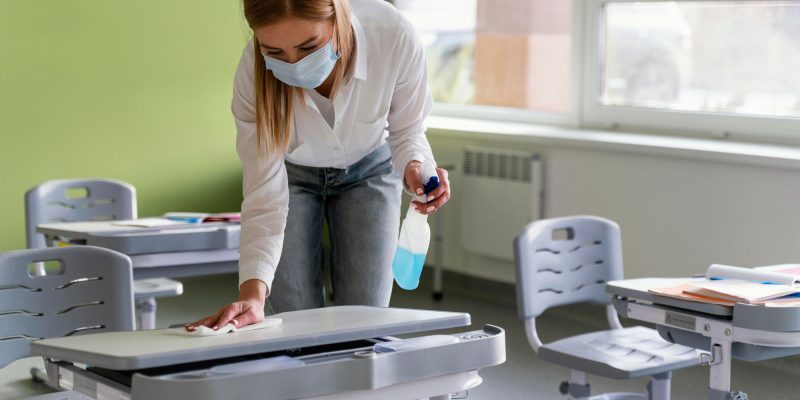
In the fast-paced world of education, maintaining cleanliness and hygiene in schools is not just essential for the health and well-being of students and staff, but it also contributes to creating a conducive learning environment. Traditional cleaning methods are effective, but with advancements in technology, there’s a whole new array of tools and innovations available to enhance efficiency and effectiveness in school cleaning. Let’s explore how technology is revolutionizing the way we clean educational facilities.
1. Robotics in Cleaning: Robotic cleaners are becoming increasingly popular in the cleaning industry, and schools are no exception. These autonomous machines can sweep, mop, and even scrub floors without direct human intervention. With their ability to navigate around obstacles and cover large areas efficiently, robotic cleaners are a game-changer for maintaining cleanliness in school hallways, classrooms, and other spaces.
2. UV-C Disinfection Devices: In the fight against germs and pathogens, UV-C disinfection devices are invaluable tools. These devices emit ultraviolet light at a specific wavelength that is effective in killing bacteria, viruses, and other microorganisms. In schools, UV-C devices can be used to disinfect high-touch surfaces, such as desks, doorknobs, and cafeteria tables, providing an extra layer of protection against illness-causing germs.
3. Touchless Cleaning Systems: Touchless cleaning systems, including automatic dispensers for soap, hand sanitizer, and paper towels, are gaining popularity in schools due to their hygiene benefits. By minimizing contact with surfaces, these systems help reduce the spread of germs and promote good hand hygiene practices among students and staff. Additionally, touchless cleaning equipment, such as automatic scrubbers and sprayers, streamline the cleaning process and improve efficiency.
4. IoT-enabled Cleaning Solutions: The Internet of Things (IoT) is revolutionizing various industries, including cleaning. IoT-enabled cleaning solutions utilize sensors and connectivity to collect data and optimize cleaning operations. For example, smart trash cans equipped with sensors can alert cleaning staff when they need emptying, preventing overflow and ensuring timely waste removal. Similarly, IoT-enabled cleaning equipment can track usage patterns and performance metrics, allowing for predictive maintenance and efficient resource allocation.
5. Green Cleaning Technologies: In response to growing concerns about environmental sustainability and indoor air quality, green cleaning technologies are gaining traction in schools. These technologies encompass eco-friendly cleaning products, equipment, and practices designed to minimize environmental impact and reduce exposure to harmful chemicals. From biodegradable cleaning agents to energy-efficient cleaning equipment, green cleaning technologies offer a safer and more sustainable approach to school cleaning.
Conclusion: As technology continues to evolve, so too does the landscape of school cleaning. By embracing innovations such as robotics, UV-C disinfection devices, touchless cleaning systems, IoT-enabled solutions, and green cleaning technologies, schools can achieve higher levels of cleanliness, efficiency, and sustainability. By investing in these technologies, schools demonstrate their commitment to providing a safe and healthy learning environment for students and staff alike. As cleaning professionals, it’s essential to stay abreast of these advancements and leverage them to deliver exceptional cleaning services that meet the evolving needs of educational facilities.
For More School cleaning tips and information – https://www.cleaningservicesmelbourne.com.au/education-institute-cleaning-melbourne/